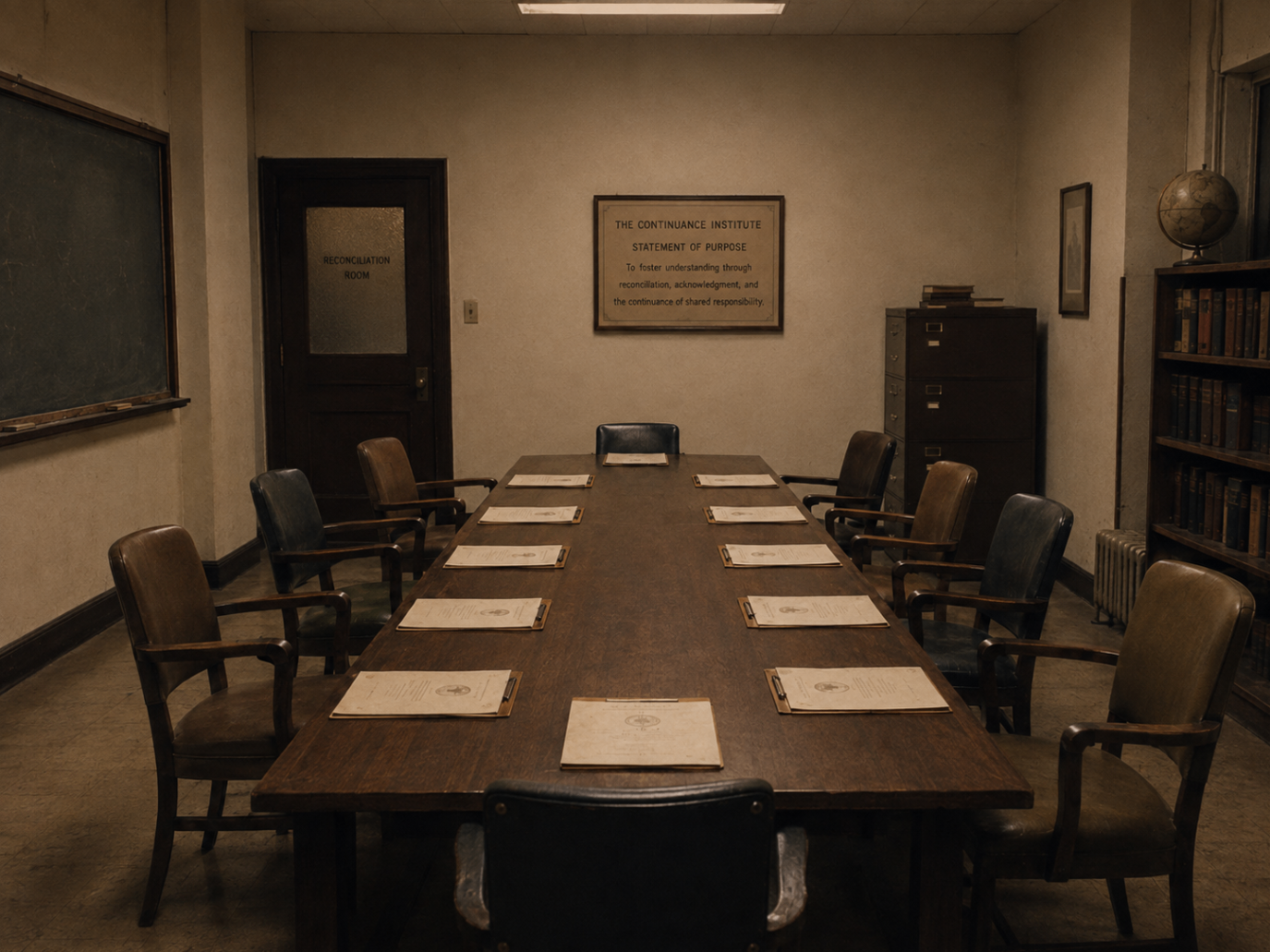
The Continuance Institute
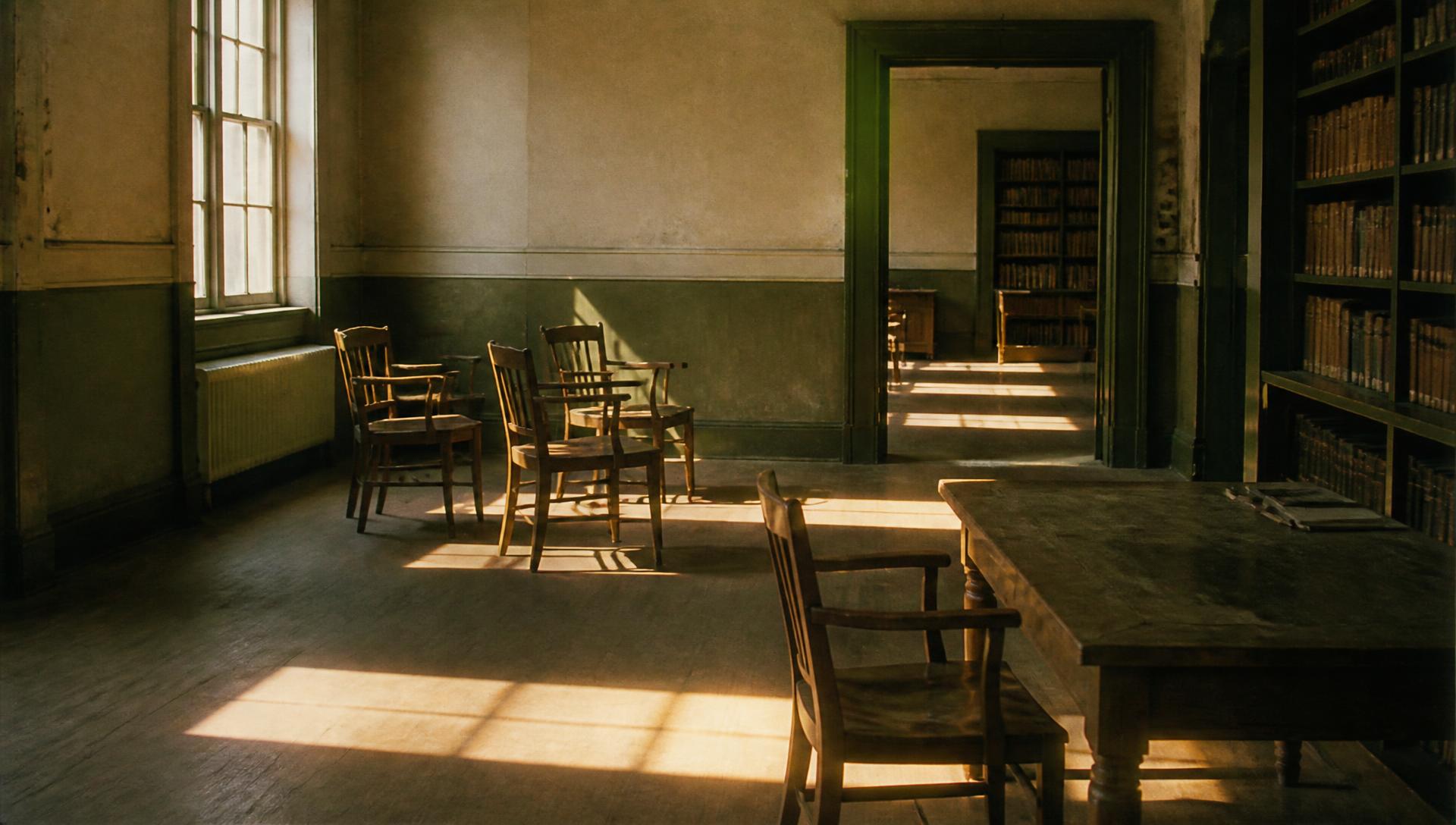
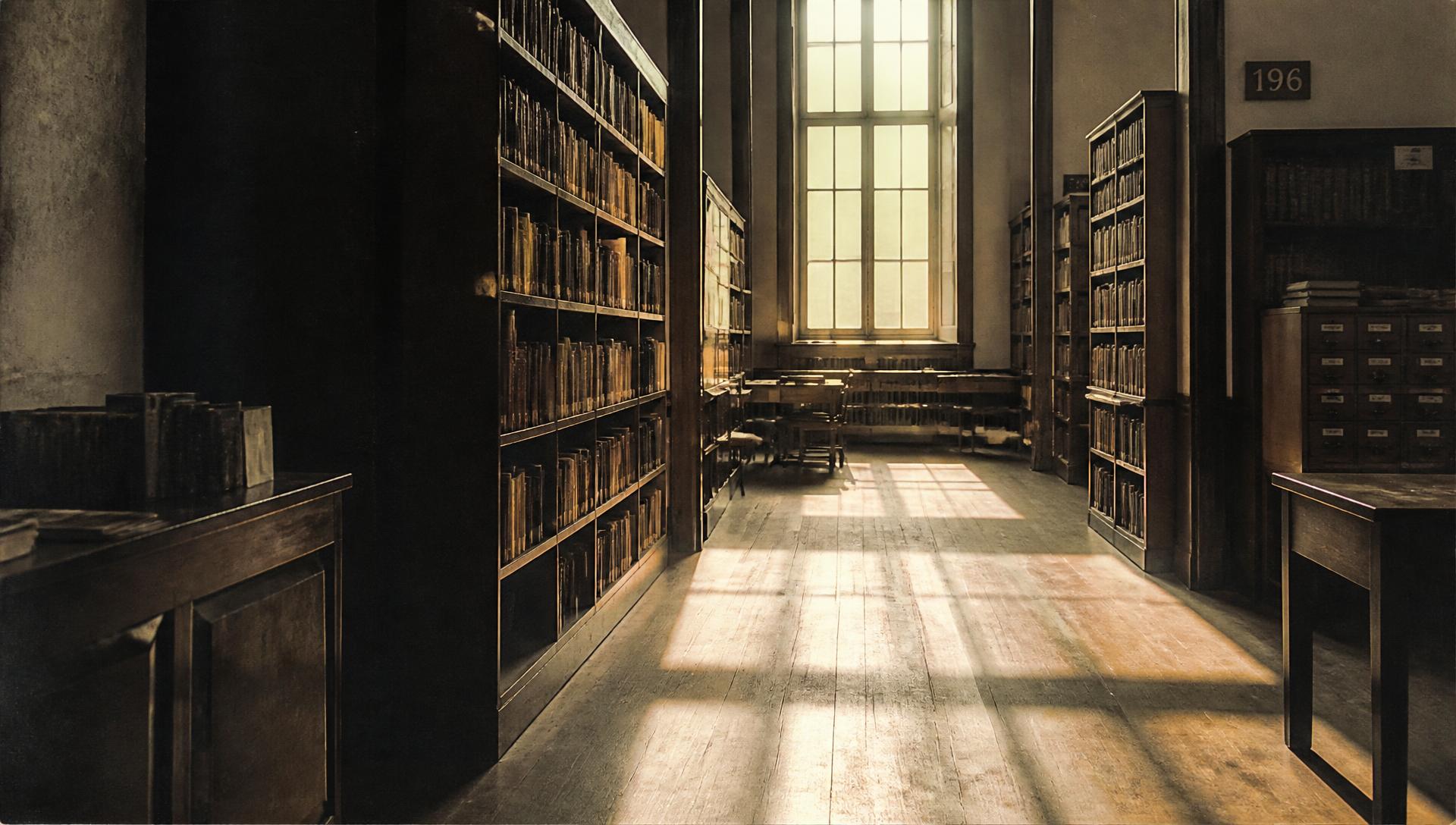
Late sunlight moving across the floor of the reading room at the North House

The Continuance Institute

You are not required to live in fragments.

The Continuance is a practical tradition of attention, mutual responsibility, and deliberate living.

Established

1974

Residential houses

11

Active circles

38

Funding

Independent and member-supported

A more deliberate relationship with time, work, memory, and one another.

The Continuance Institute supports individuals and communities seeking a more deliberate relationship with time, work, memory, and one another. We maintain eleven residential houses, an archive, and a programme of public service in the places where our houses stand. Most members do not live near a house: the practice is carried locally by thirty-eight circles.

We are not a religion and we make no supernatural claim. We have maintained a practice that some people find useful. Most people encounter the Continuance through a person they already trust.

Read about the practice
The three principles

Attention

To perceive without immediately consuming, judging, or reacting.

Attention is not concentration. Concentration narrows; attention receives. The practice begins here because nothing else can be built on a mind that arrives late to its own experience.

Continuity

To act as though today belongs to the same life as tomorrow.

Most harm is done by people who have quietly decided that this week does not count. Continuity is the refusal of that exemption, held daily, in small matters, without ceremony.

Obligation

To accept that a meaningful life is formed through responsibility to others.

We do not treat obligation as a burden placed on freedom. We treat it as the material from which a life is actually made. What you are obliged to, you will eventually resemble.

What we actually do

Gathering · study · service · silence · shared meals

01

Weekly Observances

Structured gatherings involving silence, discussion, shared meals, and practical service. Two hours. No performance is asked of anyone present.

02

Residential Periods

Three- to twelve-day stays at Continuance houses. Members share cooking, maintenance, study, and the ordinary work of keeping a building standing.

03

The Archive

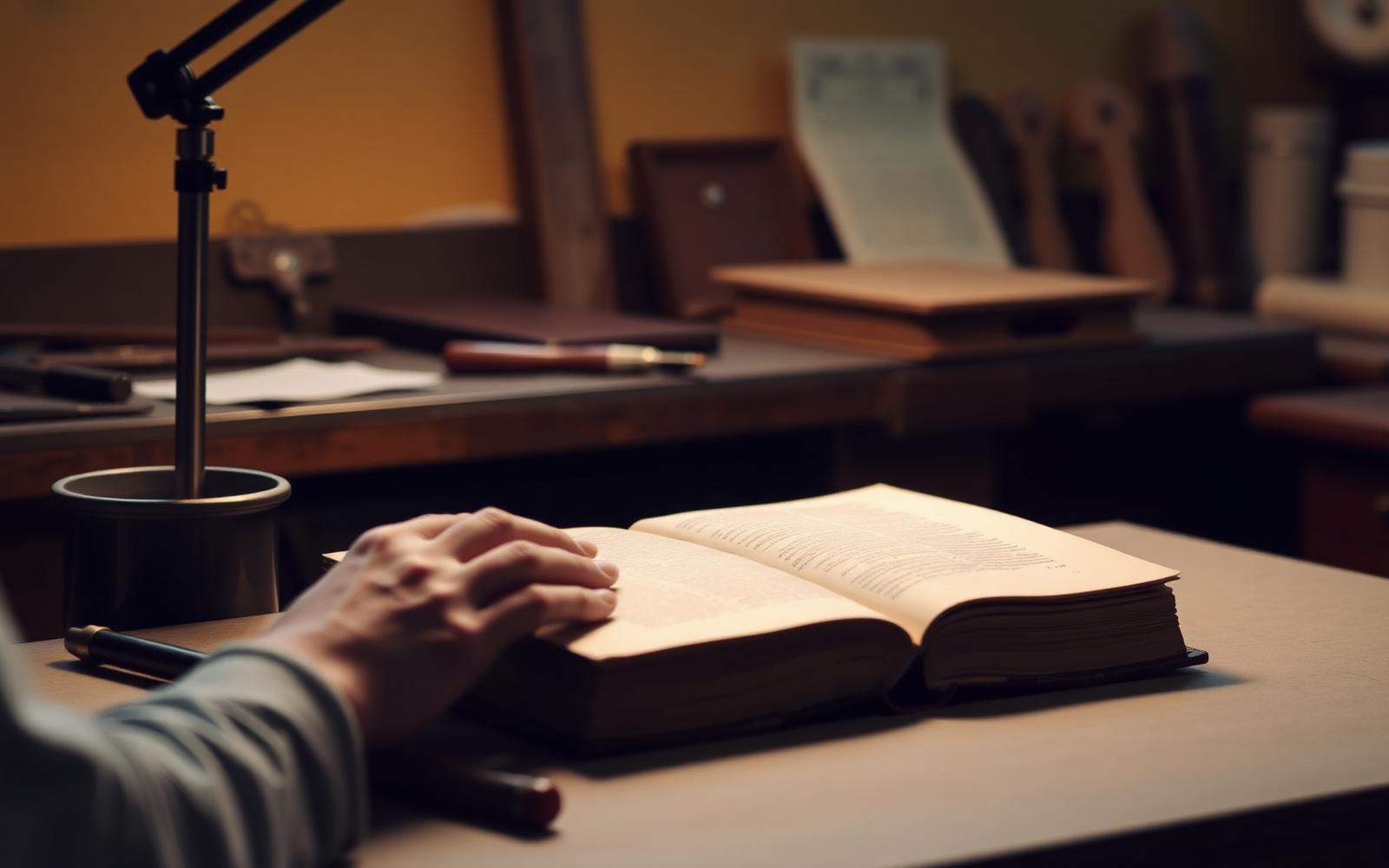
Essays, oral histories, field records, and preserved correspondence, maintained continuously since the first collection was assembled at the North House.

04

Public Work

Food programs, restoration projects, hospice support, and community education, carried out in the places where our houses stand.

05

The Fellowship

A long-term course of study and participation, undertaken with a steward, typically over four years and often longer.

The house year

Four seasons · four shared forms

The Practice is carried through recurring work: twelve minutes before the reading, a table of things awaiting repair, a boundary walked at the start of each season, and the weather written in the house book before the first shared meal of the month. No house keeps the year in exactly the same way.

Winter

Repair and correspondence

Indoors, with the tools out.

Spring

Boundaries and water

Out to the line, and what the winter did to it.

Summer

Public work and residential periods

Longer days, more people in the house.

Autumn

Harvest, reconciliation, and putting by

What is kept, and what is written down.

The Quiet Twelve
Twelve minutes are kept before the reading. Nothing is assigned to the silence.
The Repair Table
A table, a bench, or a marked shelf where ordinary objects wait to be mended.
The Boundary Walk
At the start of each season the practical boundary is walked and what is wrong with it is written down.
The Weather Entry
Before the first shared meal of the month, one person writes the weather in the house book.
The house year in full
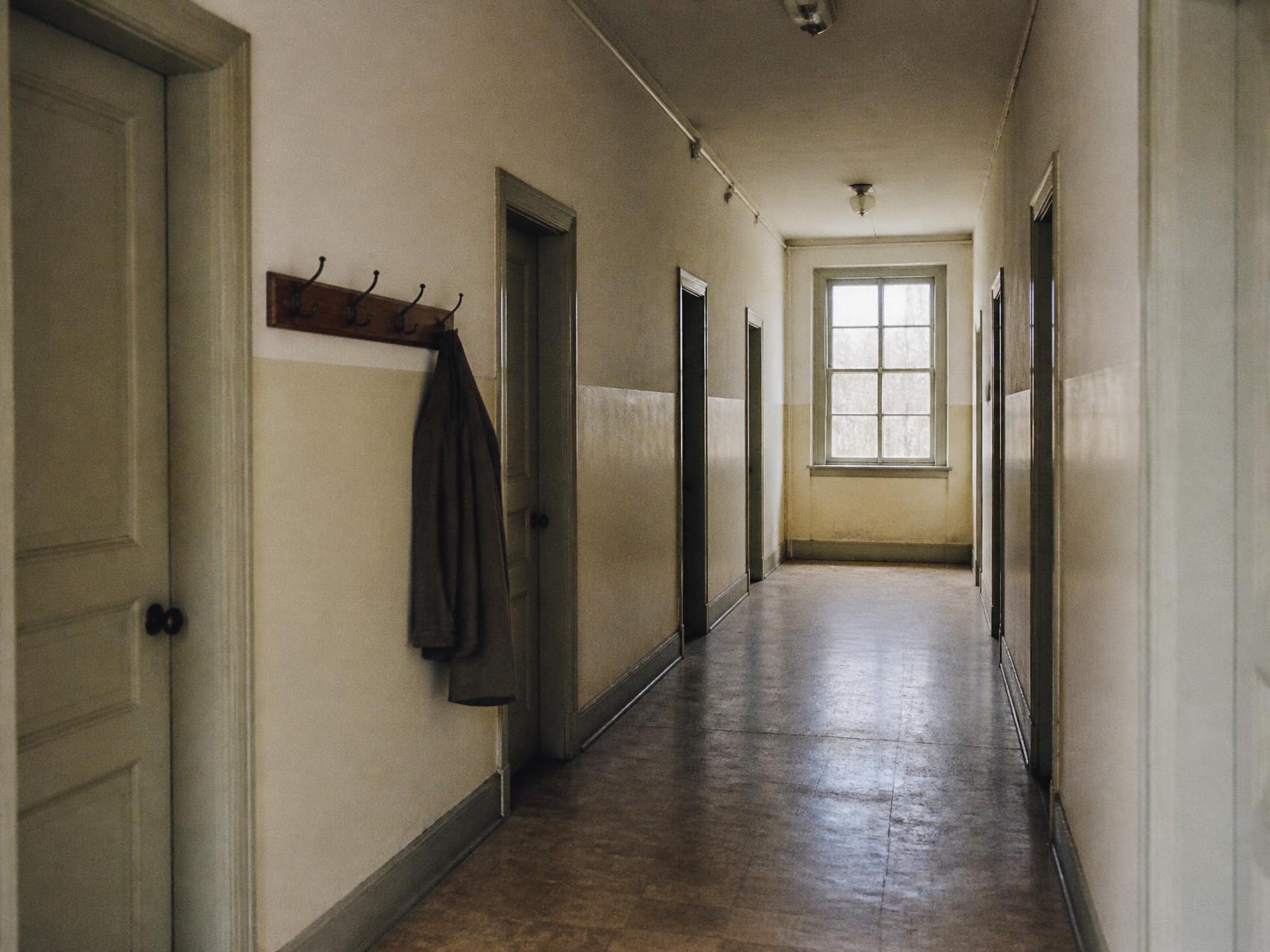
Still 1 of 4: The passage, before six

The passage, before six

0:00 / 0:28 · still 1 of 4

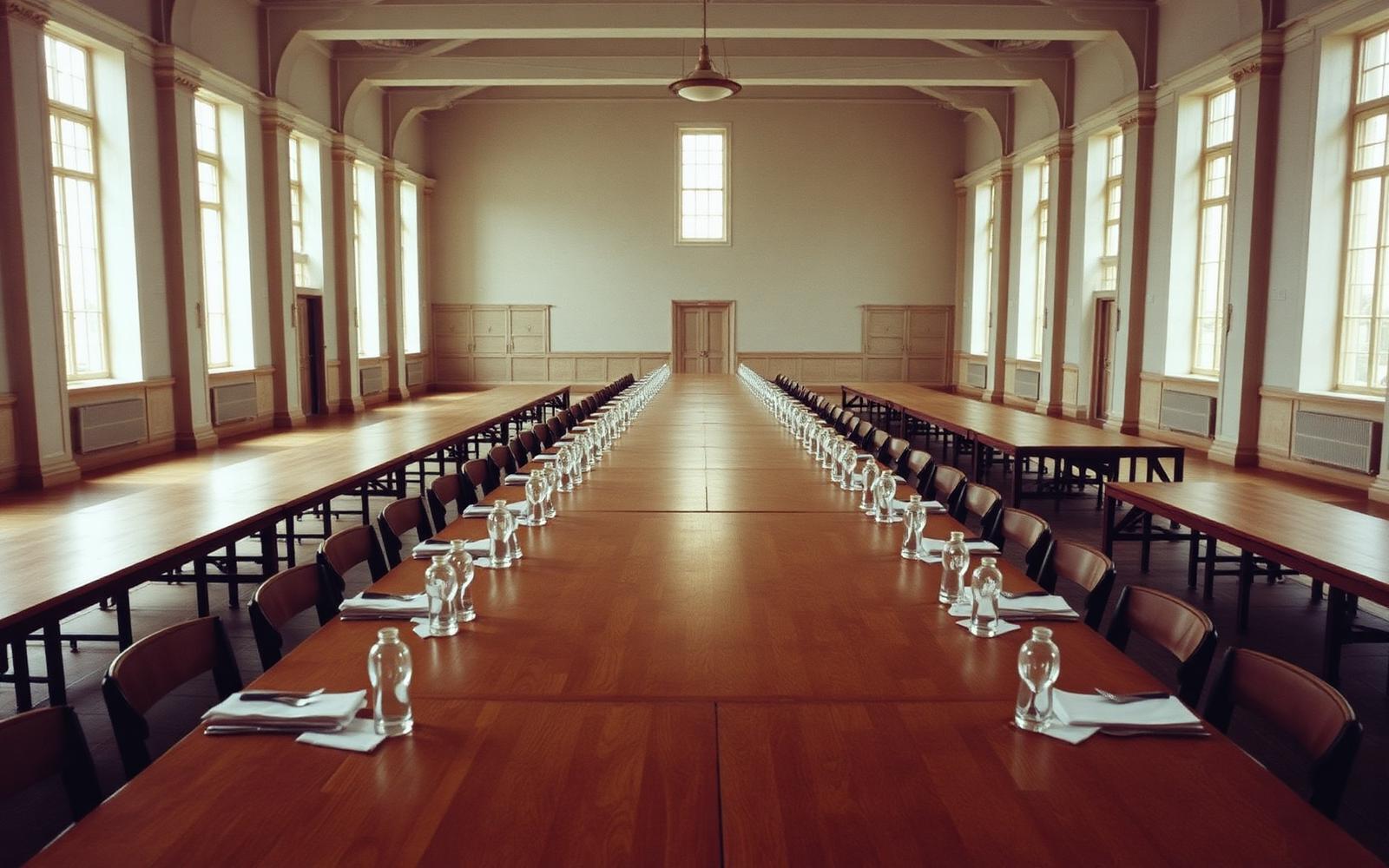
Archival still sequence — A Day at the North House · 4 exposures · 28 seconds · room tone

Recorded 1998. Stills and a room-tone recording are what the archive holds.

Description of sound (captions)
  1. [room tone: a large stone room, a clock somewhere behind the camera]
  2. [footsteps on boards, unhurried, crossing left to right]
  3. [water running; crockery set down; two voices, too low to transcribe]
  4. [wind against glass; a door held and released rather than closed]
  5. [a bell, twice. The room tone continues.]
  6. [chairs drawn in; the same clock]

Transcribed by the archivist, 2011. No speech in the recording is intelligible enough to caption; the descriptions above are of sound only.

“A practice survives only when it can be carried by ordinary people on difficult days.”

Eleanor Vale, letter to Thomas Orrell, 1976
Read the letter in full

From the Journal

All essays

Public gathering

An Introduction to the Practice

First Thursday of every month, at each house, from six in the evening. Silence, a reading, a discussion, and a meal. Attendance is free. Reservation required. No contribution is requested at any point.

Reserve a place

The Fellowship

Not an escape from ordinary life

The Fellowship is not an escape from ordinary life. It is a commitment to inhabit it more completely: four years of study, service, and participation, undertaken with a steward.

Request an introductory conversation
  • 26 July · Fell House

    The hill road is closed above the cattle grid until the culvert is replaced. Members arriving for the residential period should come by the village and allow forty minutes on foot. The steward will not send a car.

  • 14 July · Karst House

    The summer reading period is full. Names received after the closing date have been entered for next year in the order received, which is not the order in which they will be read.

  • 2 July · The North House

    Hélène Ambrose-Idris, of this house since 1979, died at home on the 28th of June. There will be no service. Her account is closed and her entry is retained.