The Houses · H-06
Cedar House
Aomori Prefecture · Established 1993 · Limited public program
Cedar House is small and does little on its own account. Nearly all of its work is done as one partner among several.
- Region
- Asia and Pacific
- Residential places
- 12
- Residence
- Twelve places, in periods of seven to twelve days; conversational Japanese is expected of residents staying longer than a fortnight.
- Recurring form
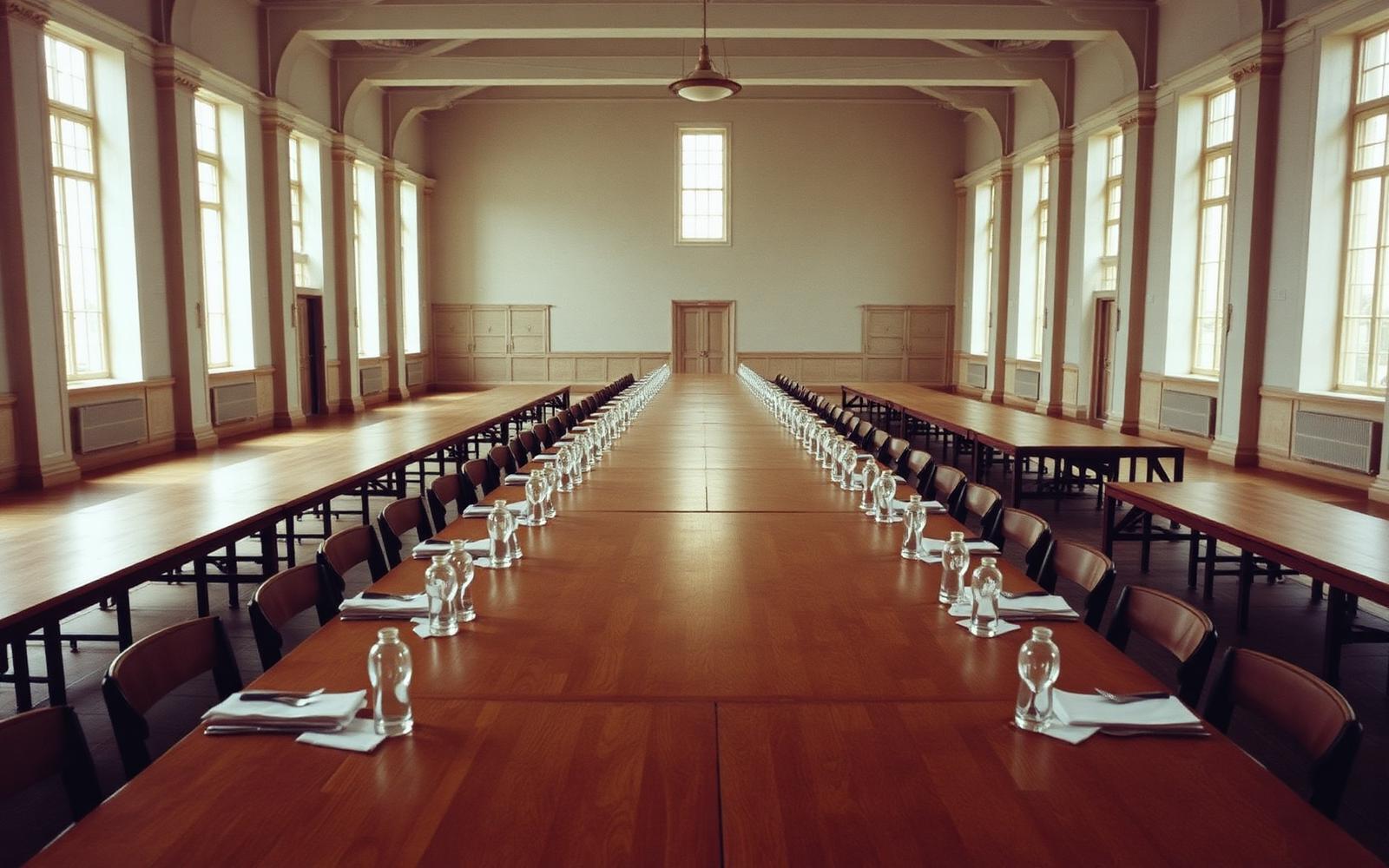
- The house keeps no table of its own; residents cook at the community meal in the town.
- Fabric
- Ground floor step-free. The workshop has a raised threshold of about ten centimetres.
This is a register entry. No address, telephone line, or arrangement to visit is published here, and none can be taken up through this website.
The house
The house was established in 1993 at the invitation of a neighbourhood welfare council that had more work than volunteers and no objection to a foreign institution taking instruction rather than giving it. That arrangement has been kept deliberately: the house does not run programmes in the town, it staffs other people's.
The craft work began with a joinery workshop whose owner was closing it. Two residents apprenticed themselves for four years so that the tools and the method would not leave the valley. The workshop reopened in 2001 under its original name.
The house's records are kept in Japanese and reconciled into the Common Record in translation, with the Japanese held as the authoritative version.
The work
- Elder support: meal delivery, home visiting, and winter checks, rostered by the neighbourhood welfare council rather than by the house.
- Craft preservation: joinery and tool maintenance with the reopened workshop, and an apprenticeship of four years.
- Community meals, cooked for anyone who comes, in the community hall rather than at the house.
Observance kept here
Repair before replacement
A tool is not retired while any bench in the workshop can still restore it. The judgement belongs to the workshop, not to the house.
The shared forms, here
- The Repair Table
- Tools. A blade is not retired while any bench in the workshop can still restore it.
- The Weather Entry
- Entered against the forest survey, which uses the southern-slope readings; the house keeps its seasons by the local year and not by the Maine one.
The house, day to day
Small, exact, and cooked for the weekly town meal rather than for the house. Cedar House eats late and eats what the workshop's schedule allows, which is often at nine o'clock and standing up.
A timber craft workshop and adjoining dwelling, rebuilt after the 1993 snow load took the original roof. Heavy snow country: the roof pitch, the snow bars, and the March clearing of the north valley are all consequences of that winter and are all in the schedule.
- Rooms
- The shop, The back room, The small room, and the usual others (10 in all).
- In the kitchen
- The workshop soup. Root vegetables, miso, and whatever the elder support round brought back. Made in a single pot, twice a week, by whoever is not in the shop.
- Outstanding
- Roof snow load — Snow bars inspected each November. The north valley is cleared by trade, not by residents, and this is a rule. Dust extraction — Filters changed quarterly. Sawdust in the record room is the reason the ledger is kept in a slipcase. Shop threshold — Ten centimetres. A removable ramp is kept beside the door and the repair table is brought out monthly.
- Said here
- “Number four's out again.” — An apron, a tool, or a person is not where the board says.
- Local custom
- The outlines. A painted tool board that makes a missing tool visible in a second and makes a returned tool an occasion for argument.
Local participation
- The snow round in winter: eleven households, checked twice a week.
- Orchard work in the two weeks after the first frost.
- Separation
- Noticed once, to the steward. The snow round is reassigned before the notice is filed.
A life in the practice
The term a steward holds, and its limits
The steward
Rie Katsuragawa
Nurse · steward since 2018
Twenty-six years in district nursing. Holds the roster with the welfare council and does the winter checks herself.
Records
Other houses
- Karst House — Upper Carniola
- South House — Southland, South Island
Entry H-06 · reviewed 30 January 2026