The Continuance Institute

Public record

Dr. Eleanor Vale

Vale spent twenty years cataloguing other people's institutions before consenting, reluctantly, to the founding of one of her own.

1935–1998 · Historian of institutions; university archivist; principal author of the Founding Letter

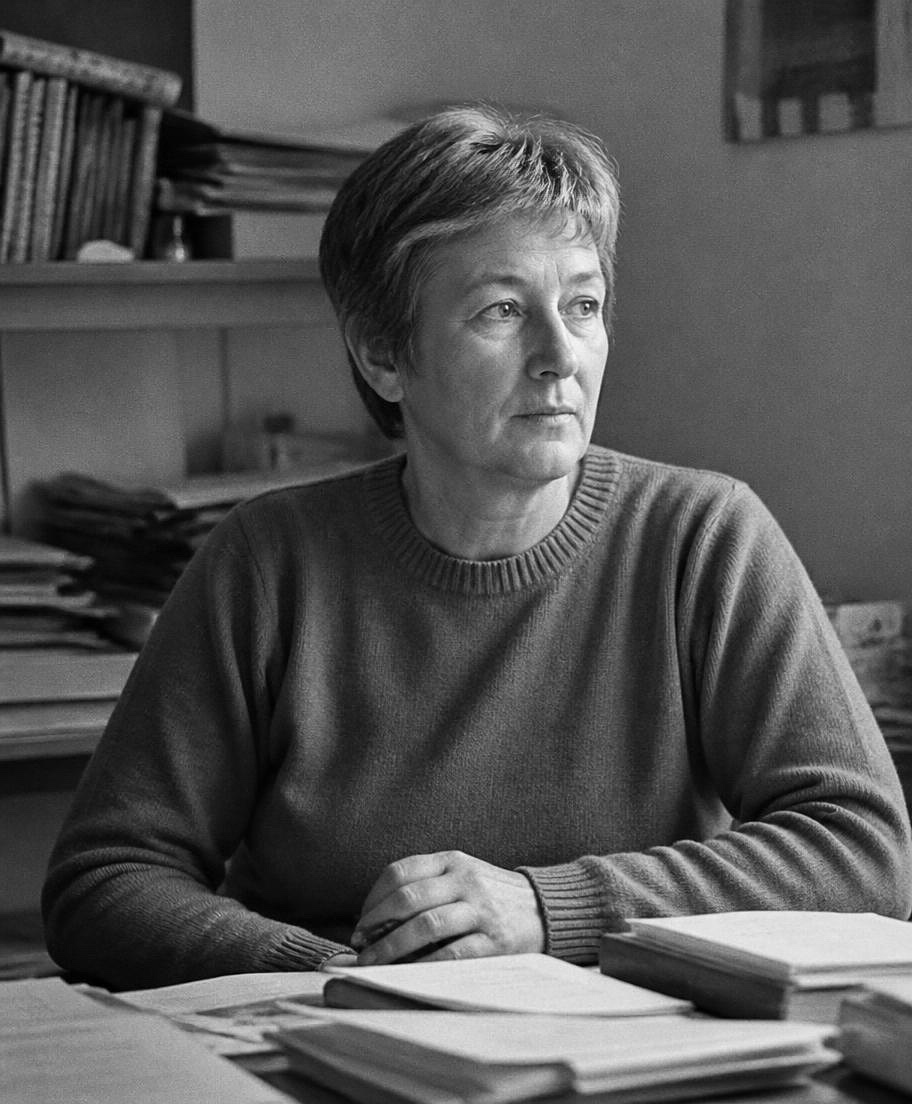
Black-and-white portrait of Eleanor Vale seated at a desk among papers, looking away from the camera.
Eleanor Vale, c. 1989. Photographer not recorded. One of two photographic likenesses held in the Common Record.Received with the Vale papers during the 1999 accession. Earlier custody not recorded.PHO/1989/07

Account

Eleanor Vale was born in 1935 in Bangor, Maine, and trained as a historian of institutions — hospitals, mutual societies, county archives, the sort of bodies that keep minutes for a century and are then dissolved in an afternoon. She worked for eighteen years as a university archivist, and her scholarly reputation, such as it was, rested on a single argument made repeatedly in unfashionable places: that the papers an institution keeps about its own conduct are a better guide to its character than anything it publishes.

She convened the first Thursday gathering in 1968 with Thomas Orrell, in a rented room above a shop. Her own account, given in the Founding Letter six years later, is that the gatherings were intended to last a winter.

Vale distrusted institutional authority, including her own, and said so in writing often enough that the phrase 'necessary danger' has passed into house use. Her objection was not to rules but to deference: she held that a body which cannot be corrected by the people inside it has already stopped being what it claims to be, whatever its rules say. Several of the Institute's least convenient arrangements — the refusal of any single leader, the requirement that disagreeing records both be kept, the standing rule that no practice may be defended by reference to a founder's wishes — exist because she insisted on them against the preference of the room.

She was rarely photographed. Two photographic likenesses are held; one, made about 1989 by a hand the Record does not name, is reproduced here. She declined a painted portrait commissioned the same year on the grounds that the Institute had more useful things to hang.

She died in October 1998, at sixty-three. She had asked that no memorial observance be held and that the ordinary Thursday go ahead that week. It did.

Materials recovered following the October fire were transferred to the Common Record in 1999.
Chronology

1935
Born at Bangor, Maine.
1957
Graduates in history; begins cataloguing work for a county records office.
1963
Appointed university archivist. Publishes on the administrative records of mutual societies.
1968
Convenes the first Thursday gathering with Thomas Orrell.
1974
Writes the Founding Letter. North House is established.
1976
Fixes the form of the Weekly Observance with Orrell.
1977
Oversees the first Members' Handbook, and declines the office of director.
1987
Directs the reconstitution of the Common Record under continuous numbering.
1998
Dies, in October.

Selected correspondence

Extracts, printed as transcribed. The originals are held in the Common Record and are the authority in any case of doubt.

  • 1972 · to Thomas Orrell · CR-C-0114

    You want a building. I want to be certain that when we have one, we are still doing the thing we did without one. Those are not the same worry and I would like both of them minuted.
  • 1976 · to Thomas Orrell · CR-C-0207

    A practice survives only when it can be carried by ordinary people on difficult days. Everything else is decoration and I would like us to be austere about decoration.
  • 1981 · to the stewards of the North House · CR-C-0341

    I notice the minutes have begun recording what I said as though it settled the matter. Please stop. Record what was decided and who dissented; my name is not an argument.
  • 1993 · to a member enquiring about the archive · CR-C-0902

    We keep both accounts because I do not trust our judgement about which of them will look truthful in fifty years. Neither should you.

Related records

Record compiled from the North House papers, the minute books, and the 1999 accessions. Reconciliation status: Continuous. Public transcription revised 2006.